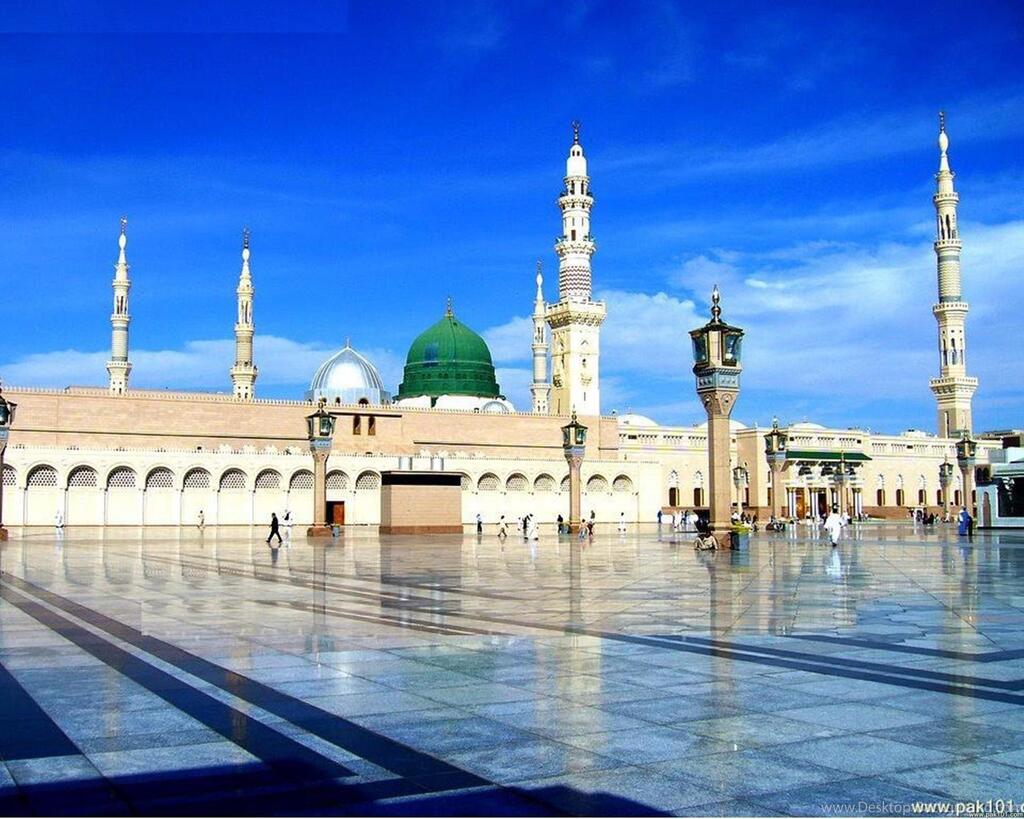
Module Description: In this last module we conclude the Medinan period with the passing of the Prophet صلى الله عليه وسلم .This period of the Prophet’s صلى الله عليه وسلم life saw significant changes in the spiritual and social life of the community: the finalising of the ritual fast, the call to prayer, and almsgiving, as well as new rules relating to trade and to newlysanctioned military engagement. In treating these matters, we will highlight the Prophet’s صلى الله عليه وسلم steadfastness, unfailing resolve, and wisdom in how he implemented these new laws and how he overcame the barriers and challenges he faced. As we shall see, his response was always informed by the Qur’anic command ‘and push back with that which is better’ (Q41:34). Through a close study of this final period in his life, students will develop a greater appreciation and admiration for the Prophet صلى الله عليه وسلم and draw inspiration and wisdom that will inform their own lives.
The life of the Prophet Muhammad صلى الله عليه وسلم is a cornerstone for the full understanding of Islam. Every other Islamic discipline serves to elucidate how the tradition (sunnah) of the Prophet was embodied in his noble life.
In this year course, divided into three modules, each module comprising 10 of weeks. The Prophetic life is studied in a chronological order following the Prophet’s صلى الله عليه وسلم age at the time of events. Particular attention will be given to those Prophetic events that express virtuous character in the face of adversity. In addition, a sign posting of how other Islamic disciplines use prophetic events to inform their respective disciplines and were in the Quran these are mentioned. This is to cultivate in students an awareness and desire to further their learning of Islam’s integrated scholarly tradition.
Module Text: The course draws on works that came to inform Islam’s traditional pedagogy and represent its’ normative expression. These works are cited below for reference followed by brief biography authors:
1.
Ibn Hishām, ‘Abd al-Malik.
. Al- sīrah al-nabawiyyah. 4vols. Edited by Muhammad Muhyi al-Din ‘Abd al-Hamid.Cairo: Matba’ al- Hijäzi, 1963 2. Trevor Le Gassick, Muneer Goolam Fareed and
Ibn Kathir is Isma'il ibn 'Umar ibn Kathir
(2006). The life of the prophet Muḥammad .4. Reading: Garnet. 3. Al-Shāmī, Muhammad b.Yusuf al-Salihī. Subul al-Hudā wa al-Rashād fī sīrah khayr al-‘Ibād. 12vols Edited ‘Abd al-Mu’izz ‘Abd al-Hamid Cairo:Ihyā al-turāth al-Islamiyy, 2002
Module Outline
Below is the weekly outline for this module.
Week 1 – Age 53
Week 2 – Age 53
Week 3 – Age 53
Week 4 – Age 53
Week 5 – Age 53
Week 6 – Age 53/54
Week 7 – Age 55
Week 8 – Age 55/57
Week 9 – Age 57/60
Week 10 – Age 60 – 63
Module Instructor
“The scholars are the inheritors of the prophets.” [Abu Dawud]
Shaykh Thaqib Mahmood
Shaykh Thaqib Mahmood’s educational journey in the Islamic disciplines comprises a rich tapestry of experiences from the late 90s to 2007. He sought knowledge in many locations, benefiting from and receiving licenses in general and specific areas from scholars in Yemen, Syria, Morocco, Turkey, Mauritania, Makkah and Madinah.~
Knowledge is understanding that every choice and view one forms is framed in the guidance presented in the Quran and the Prophetic way as understood by Ahle Sunnah wa al-Jama’ah.
Practice
Practice seeks to implement that knowledge in all aspects of our lives. Sincerely applying knowledge facilitates the soul to acquire virtuous characteristics and move beyond its vices and capricious element
Realisation
The soul becomes receptive to realisations concerning God’s oneness, majesty, beauty, and how creation is an ongoing sign of Divine favour. This witnessing is highlighted in the Prophetic statement,‘Excellence is to worship Allah as though you see Him. If you do not see Him, He sees you.
Abū Muḥammad ʿAbd al-Malik ibn Hishām ibn Ayyūb al-Ḥimyarī al-Muʿāfirī al-Baṣrī
(died 7 May 833), or Ibn Hisham, edited the biography of Islamic Prophet Muhammad written by Ibn Ishaq. The nisba Al-Baṣrī means “of Basra”, in modern Iraq Ibn Hisham has been said to have grown up in Basra and moved afterwards to Egypt. His family was native to Basra but he himself was born in Old Cairo. He gained a name as a grammarian and student of language and history in Egypt. His family was of Himyarite origin and belongs to Banu Ma‘afir tribe of Yemen. As-Sīrah an-Nabawiyyah, ‘The Life of the Prophet’; is an edited recension of Ibn Isḥāq’s classic Sīratu Rasūli l-Lāh ‘The Life of God’s Messenger’. Ibn Isḥāq’s now lost work survives only in Ibn Hishām’s and alTabari’s recensions, although fragments of several others survive, and Ibn Hishām and alTabarī share virtually the same material.
Wikipedia. (2022b). Ibn Hisham. [online] Available at: https://en.wikipedia.org/wiki/Ibn_Hisham
Ibn Kathir is Isma'il ibn 'Umar ibn Kathir ibn Daww ibn Dara', Abu al-Fida' 'Imad ai-Din
Sub Heading Goes Here
Born in 70111302 in a village outside of Damascus, where he moved with his brother at the age of five. He later travelled in pursuit of Sacred Knowledge, becoming a principle Shafi’i scholar, hadith master (hafiz), and historian who authored works in each of these fields, though he is perhaps best known for his four-volume Tafsir al-Qur’an al-‘Azim [Commentary on the Mighty Koran], which reflects its author’s magisterial command of the sciences of hadith. He died in Damascus in (al-A ‘lam (y136), 1.320).
(Keller, Nuh Ha Mim. Reliance of the Traveller: A Classic Manual of Islamic Sacred Law. Rev.ed. Beltsville, MD: Amman, 1996)
Shaykh Thaqib Mahmood
Shaykh Thaqib Mahmood’s educational journey in the Islamic disciplines comprises a rich tapestry of experiences from the late 90s to 2007. He sought knowledge in many locations, benefiting from and receiving licenses in general and specific areas from scholars in Yemen, Syria, Morocco, Turkey, Mauritania, Makkah and Madinah.
The central place of studying abroad unfolded in Damascus, where Shaykh Thaqib Mahmood immersed himself in a traditional curriculum. He received one-on-one tutoring for particular subjects or was part of a small group of students. Over time, he studied various subjects to their advanced levels with various scholars. This led to a comprehensive study of the well-known and established scholarly works, showcasing the depth of arguments and positions representing the mainstream understandings of this Ummah.
Since his return to the UK in the last 17 years, Shaykh Thaqib Mahmood has been actively involved in teaching a broad spectrum of Islamic disciplines, from Sirah to Tafsir. In addition developing educational programmes at the various institutions he’s been serving. His significant contributions include a 9-year tenure as a Quranic Arabic tutor at the University of Oxford, where he designed and developed the Quranic Arabic programme, which was previously neglected, bringing it up to par with the other languages taught at the Faculty of Theology and Religion. He also played a crucial role in creating the first approved BSL (British Sign Language) Adhan, providing essential knowledge of the Arabic phrases that BSL can best capture. His academic achievements include a PGDip in teaching communicative Arabic and an MA in linguistics; he completed both postgraduate programmes at SOAS, which have further enriched his understanding and teaching of Islamic disciplines.
The following are the names of some of the scholars he studied under, each of whom played a meaningful role during his time away studying.
In Yemen: Habib Umar b. Hafidh In Damascus: Shaykh Abdulah Siraj ud-Din, Shaykh Shukri al-Luhafī, Shaykh Ramadhan al-Buṭī, Shaykh Muhammad Darwish, Shaykh Abdul Wahaab, Shaykh Muhammad al Yaqoubi, Shaykh Adnan al Majd, Shaykh Maree al Rashid and Shaykh Khalil al Sabbagh, In Mauritania: Murabit al-Hajj, Murabit Ahmad Fāl and Murabit Hadamīn. In Turkey: Shaykh Mahmud Effendi, Shaykh Muhammed Ameen Siraj, Shaykh Ehsaan Hojah. In Makkah: Shaykh Khalid, Shaykh Abdul-Qadir al-Dhabwān, Shaykh Ahmad al-Ruqaymi, Shaykh Ahmad al-Kāf, and Shaykh ‘Abbas al-Maliki In Madinah: Shaykh Abdur Rahman And in the UK: Shaykh Siraj and Shaykh Muhammad Ba Shuayb.
May Allah preserve those who are alive and grant them the best in this world and the hereafter. And may Allah shower His mercy on those who have returned to their creator and, forgive their shortcomings, and raise their ranks. He continues his learning under both local and international scholars. Shaykh Thaqib has been part of the Fountain for over 25 years.