The Legal Maxims of Islamic Law (al-Qawāʿid al-Fiqhiyyah): An Introduction to the Foundational Principles of Fiqh
Islamic law is not simply a collection of individual rulings. It is a coherent legal system built upon universal principles. This course introduces students to the legal maxims (al-qawāʿid al-fiqhiyyah) that have guided Muslim jurists for centuries, helping them understand not only what the law says but also the reasoning behind it.
The study of legal maxims has long been recognised as an essential discipline for anyone seeking a deeper understanding of fiqh and its application. Over ten weeks, students will study ninety-nine foundational legal maxims drawn from the rich tradition of Islamic jurisprudence. The course follows the well-known arrangement of the ninety-nine maxims found in the Majallat al-Aḥkām al-ʿAdliyyah (the Ottoman Civil Code). Together, these concise principles provide a structured framework for understanding how Islamic law is interpreted, applied, and developed across a wide range of legal issues.
Instead of studying individual rulings in isolation, students will learn the overarching principles that connect the various chapters of fiqh. These maxims reveal the underlying methodology of Islamic law, showing how jurists derive rulings, resolve competing legal considerations, weigh certainty against doubt, recognise the role of custom, accommodate necessity, and preserve the higher objectives of the Sharīʿah. Each maxim will be explained in clear English, supported by practical examples, and examined alongside its scope, limitations, and recognised exceptions.
Intended for students who have already completed an introductory study of fiqh, this course provides a natural progression to more advanced studies in Islamic jurisprudence. By learning these foundational principles, students will develop the conceptual framework needed to approach classical works of fiqh with greater confidence. They will be better equipped to identify the connections between seemingly unrelated legal rulings and to appreciate the coherence, depth, and adaptability of the Islamic legal tradition.
Module Outline
Below is the weekly outline for this module.
Week 1 (Articles 1–11) Introduction to the Majallat al-Aḥkām al-ʿAdliyyah, the subject of universal legal maxims (al-qawāʿid al-fiqhiyyah), and the benefits of studying them. Intentions, objectives, certainty, legal presumptions, continuity of existing states, liability, and the literal meaning of speech.
Week 2 (Articles 12–22) Explicit and implied meanings, textual authority, ijtihād, analogy, hardship, necessity, and legal concessions.
Week 3 (Articles 23–33) Removal of harm, balancing harms, necessity and need, the rights of others, and unlawful giving and taking.
Week 4 (Articles 34–44) Custom (ʿurf) as a legal authority, customary practice, changing circumstances, and the legal effect of customary usage.
Week 5 (Articles 45–55) Conflicting legal factors, principal and subsidiary matters, ownership and its incidents, legal substitutes, and continuation versus initiation.
Week 6 (Articles 56–66) Completion of gratuitous transfers, public authority, interpretation of speech, literal and figurative meanings, unrestricted expressions, and the legal significance of silence.
Week 7 (Articles 67–77) Indications, writing, gestures, translation, presumptions, proof, oaths, and admissions as legal evidence.
Week 8 (Articles 78–88) Admissions, contradictions, conditions, promises, liability and entitlement, and attribution of legal acts.
Week 9 (Articles 89–99) Direct and indirect liability, lawful authority, property rights, ownership, legal causes of ownership, and final maxims concerning premature action and consistency in legal acts.
Learning Outcomes: By the end of this course, students will be able to: Explain the purpose and significance of legal maxims within Islamic jurisprudence. Explain the meanings and applications of the ninety-nine legal maxims covered in the course. Apply legal maxims to examples drawn from different areas of fiqh. Distinguish between universal legal principles and individual legal rulings. Analyse how concepts such as certainty, custom, necessity, public welfare, and justice shape legal reasoning and the derivation of legal rulings. Interpret discussions in classical works of fiqh with a clearer understanding of the principles that underpin juristic reasoning.
Module Instructor
“The scholars are the inheritors of the prophets.” [Abu Dawud]
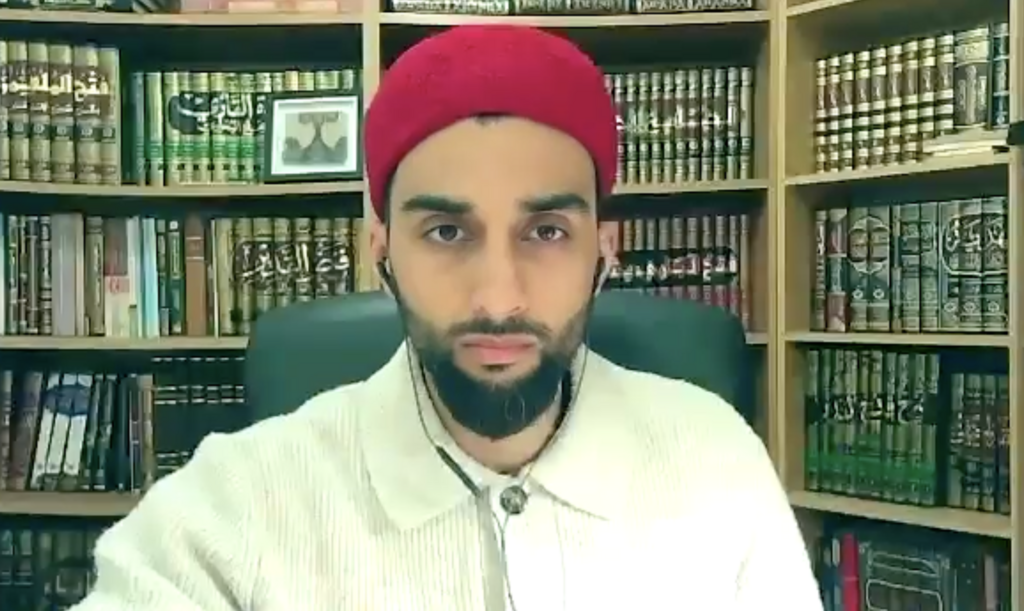
Ustadh Ammar Faiz
Ammar Faiz graduated with a Master’s in Engineering (MEng) and qualified as a Chartered Engineer (CEng). He worked as an engineer for five years before leaving his professional career in 2018 to pursue full-time Islamic studies, beginning in Cairo and continuing in Istanbul. Ustadh Ammar Faiz
Location
Online viz Zoom
Date/Time
Starting Saturday 1st August 2026 11.00am to 12.00pm
Knowledge is understanding that every choice and view one forms is framed in the guidance presented in the Quran and the Prophetic way as understood by Ahle Sunnah wa al-Jama’ah.
Practice
Practice seeks to implement that knowledge in all aspects of our lives. Sincerely applying knowledge facilitates the soul to acquire virtuous characteristics and move beyond its vices and capricious element
Realisation
The soul becomes receptive to realisations concerning God’s oneness, majesty, beauty, and how creation is an ongoing sign of Divine favour. This witnessing is highlighted in the Prophetic statement,‘Excellence is to worship Allah as though you see Him. If you do not see Him, He sees you.
Ustadh Ammar Faiz
Ammar Faiz graduated with a Master’s in Engineering (MEng) and qualified as a Chartered Engineer (CEng). He worked as an engineer for five years before leaving his professional career in 2018 to pursue full-time Islamic studies, beginning in Cairo and continuing in Istanbul.
There, he studied a broad curriculum in the Islamic sciences under senior scholars from Syria and Turkey. He completed the five-year intensive programme at the Sayyiduna Abu Ayyub al-Ansari Institute, becoming the first British graduate of the Maʿhad. He was awarded a certificate of distinction and received teaching licences (ijazat) in the Islamic sciences.
His teachers include prominent Syrian scholars such as Shaykh Mujir al-Khatib, Shaykh Khalid al-Kharsa, Shaykh Ahmed al-Fadhil, Shaykh Faiz Awad, and Shaykh Nadir Abu-Umar, as well as Turkish scholars including Shaykh Muhammad Arjaan.
He is now based in the UK, where he teaches various Islamic disciplines and Arabic across masajid and institutes.