Knowledge – Practice – Realisation
The Rational Sciences Programme
35 WEEK PROGRAMME
Module Description
The Rational Sciences Programme
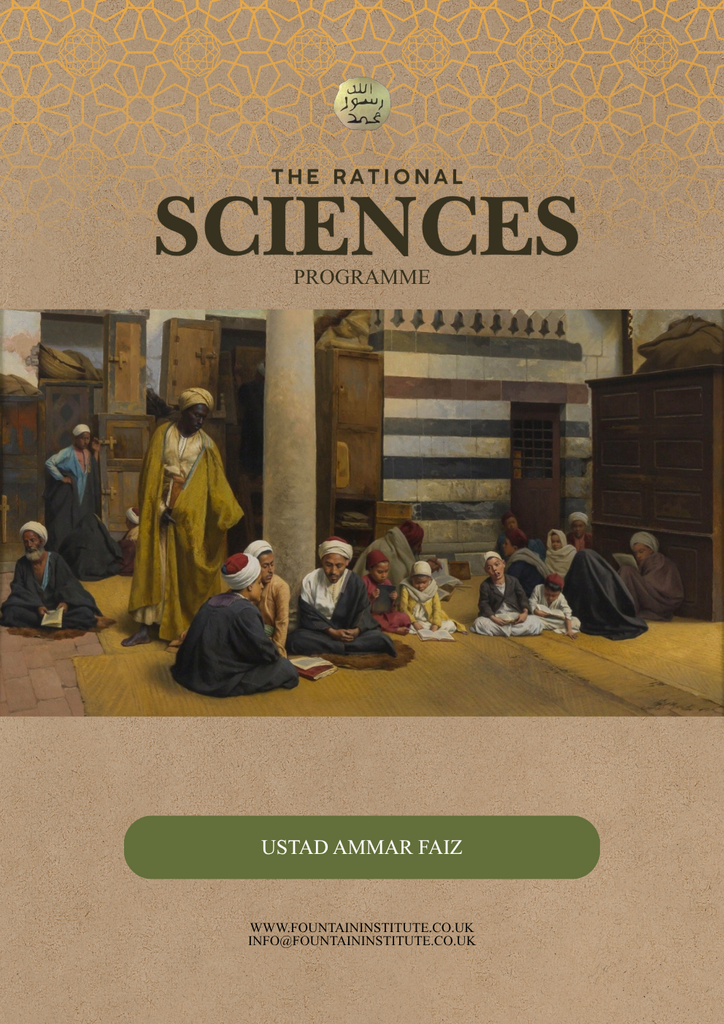
Over the course of a full academic year, students will undertake a structured and rigorous study of the Islamic rational sciences through some of the most influential texts in the Sunni scholarly tradition. More than simply studying what the tradition teaches, this programme equips students with the intellectual tools to understand how and why its conclusions were reached, cultivating disciplined thinking, intellectual confidence and a deeper appreciation of the scholarly heritage.
Rather than a series of isolated lectures, this is a carefully designed programme of guided study. Students engage directly with the classical texts under close teacher supervision, benefiting from detailed explanation, live discussion and sustained questioning within a small cohort that encourages meaningful participation and consistent progress.
Throughout the year, four foundational texts will be studied in tandem, allowing each discipline to illuminate and reinforce the others.
1.) Isāghūjī – The Foundations of Logic (Manṭiq)
2.) Umm al-Barāhīn of Imam al-Sanūsī – Rational Theology
3.) Al-Bidayah fi Usul al Din – Imam al-Sabuni – Mapping the Science of Kalām from the Maturidi School.
4.) al-Hikm – Imam ibn Ataillah
These are not simply famous books. They are among the texts through which generations of scholars were trained to think, reason and engage with the Islamic intellectual tradition. The objective of this programme is not only to study these works, but to learn from them in the manner they have traditionally been taught: carefully, systematically and under sustained scholarly guidance.
Module Outline
Learning Outcomes
Simplifying Everyday Life
Frequently Asked Questions
Find answers to commonly asked questions about this course.
What are the course prerequisites?
Students who have completed a Fard ʿAyn or introductory Islamic studies programme and are ready to progress further.
Those seeking a structured introduction to the Islamic rational sciences, including ʿAqīdah, Manṭiq and the classical intellectual tradition.
Serious students looking for consistency, academic rigour and disciplined study rather than occasional lectures.
Why This Programme Is Different?
Many theology courses introduce the conclusions of Islamic belief. This programme is designed to train students to understand the reasoning behind those conclusions.
Rather than moving quickly through isolated topics, students spend an academic year engaging directly with the classical texts that have formed generations of Sunni scholars. Through careful reading, guided explanation and structured discussion, students develop the habits of disciplined thinking that underpin the Islamic rational sciences.
Learning takes place within a limited-size cohort, allowing for meaningful interaction with the instructor, regular questioning and discussion, and individual academic support throughout the year. Coupled with assessments, personalised feedback and continued access to the instructor outside of lessons, students benefit from a level of guidance that is rarely possible in larger or less structured programmes.
The aim is not simply to complete a syllabus, but to cultivate intellectual confidence, methodological clarity and a deeper understanding of the Sunni scholarly tradition.
A Serious Commitment to Sacred Knowledge
This is not a casual lecture series or a collection of independent seminars. It is a year-long programme of disciplined study designed for students who are serious about developing the habits of sound reasoning and a deeper understanding of the Islamic scholarly tradition.
By the end of the programme, students will not simply have completed a number of classical texts. They will have developed a stronger intellectual framework for understanding theology, greater confidence in navigating contemporary questions through the Sunni tradition, and the habits of study that prepare them for more advanced scholarship.
Study the texts that have shaped generations of scholars, under close scholarly guidance and within a structured academic environment, and take the next significant step in your journey of seeking sacred knowledge.
Which text will be studied?
1.) Isāghūjī – The Foundations of Logic (Manṭiq) – For centuries, Isāghūjī has served as the traditional gateway to the science of logic. Students will develop the principles of sound reasoning that underpin the study of Kalām and provide the intellectual framework necessary to engage theological arguments with clarity and precision.
2.) Umm al-Barāhīn of Imam al-Sanūsī – Rational Theology – One of the most celebrated introductory texts in Sunni theology, Umm al-Barāhīn presents the rational proofs underpinning orthodox belief. Through careful study, students will gain a deeper understanding of the reasoning behind the core doctrines of Islam and learn to engage contemporary theological questions through the lens of the classical tradition.
3.) Al-Bidayah fi Usul al Din – Imam al-Sabuni – Mapping the Science of Kalām from the Maturidi School. – This renowned primer surveys the breadth of Sunni theological discourse from the Maturidi perspective, introducing students to the major discussions, principles and debates that have shaped the discipline. Studied alongside the other texts, it provides the wider framework within which theological concepts are understood and connected.
4.) al-Hikm – Imam ibn Ataillah – Alongside these works, students will study selected aphorisms from al-Ḥikam of Ibn ʿAṭā’illah, exploring how theological certainty should cultivate humility, sincerity and spiritual refinement. The study of theology is therefore never separated from its ultimate purpose: drawing nearer to Allah through sound belief, sincere worship and refinement of the heart.
These are not simply famous books. They are among the texts through which generations of scholars were trained to think, reason and engage with the Islamic intellectual tradition. The objective of this programme is not only to study these works, but to learn from them in the manner they have traditionally been taught: carefully, systematically and under sustained scholarly guidance.
Module Instructor
“The scholars are the inheritors of the prophets.” [Abu Dawud]
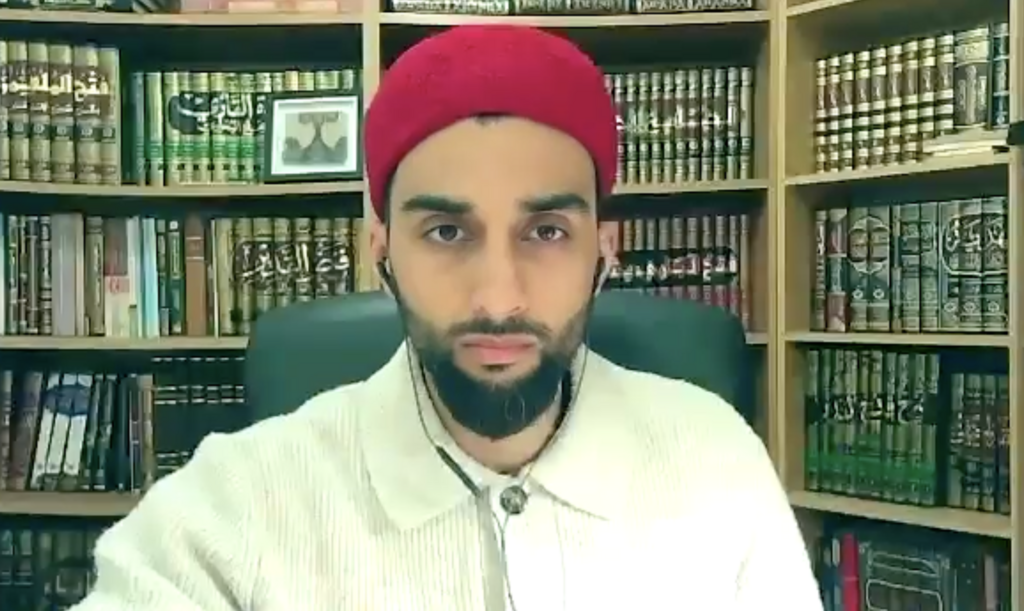
Ustadh Ammar Faiz
Ammar Faiz graduated with a Master’s in Engineering (MEng) and qualified as a Chartered Engineer (CEng). He worked as an engineer for five years before leaving his professional career in 2018 to pursue full-time Islamic studies, beginning in Cairo and continuing in Istanbul.
Ustadh Ammar Faiz
Location
Online viz Zoom
Date/Time
Starting SUNDAY 18th October 2026
1.00pm to 3.00pm